 Euro Roamer
When to leave for the airport: four numbers to set first
Flighty's when to leave feature turns your flight, drive and airport queues into one timeline with two alerts. The estimate is only as good as the cutoff you enter.
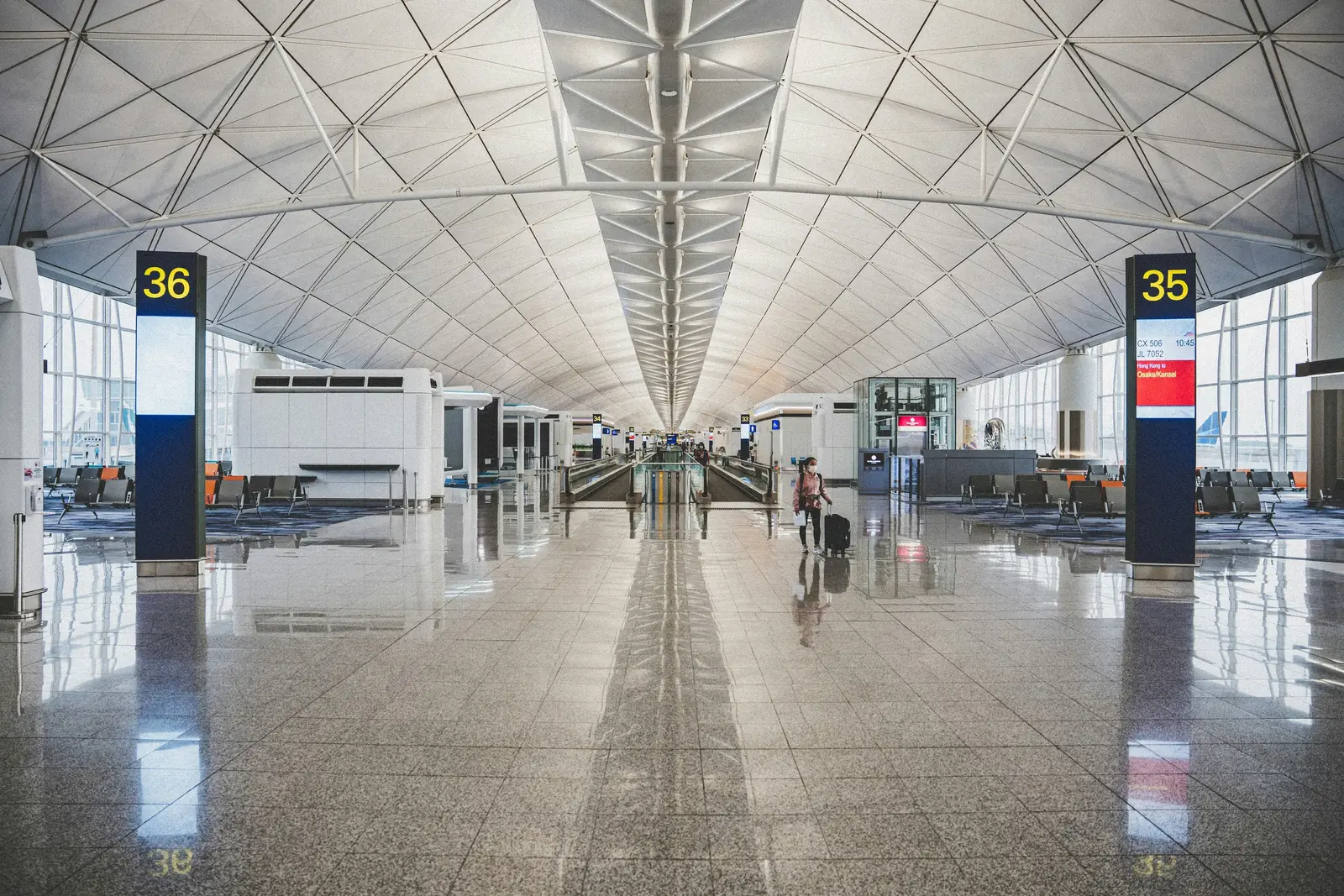
When to leave for the airport comes down to arithmetic: the drive at that hour, the bag drop queue, the walk to security, and your airline's cutoff at the end of it as a hard edge. Get the sum right and you arrive with slack for one bad queue. Get it wrong and you buy a new ticket at the walk-up price.
Flighty, a flight tracking app, announced a when to leave feature on 12 November 2026. It builds a timeline from your front door to your gate and sends two notifications: a warning to leave soon, then a time to leave alert 20 minutes later. Another notification follows if traffic gets worse.
What the feature does with your flight
You enter your flight details, then your departure address. Flighty calculates drive time from Apple Maps estimates, which take traffic and public holidays into account. For public transport you type the journey time in yourself.
Airport timings start from defaults that you can adjust across nine activities, among them parking, rental car return, check-in, security, passport control and lounge time. Ryan Jones, the founder and CEO, described the plan as one that runs from door to departure and puts travel time and airport routine on a single timeline.
Public transport is the weak spot, since you supply the number. Build in the gap between services, because waiting for the next train is what turns a short ride into a long one, and the app will not know you just watched your connection pull out.
The 20-minute gap is the useful part
Two alerts work better than one because the first is easy to dismiss. It lands while you are still finishing an email, and you decide you have time. The second arrives 20 minutes later, when the email is sent and the passport is still not in your bag. If you build your own timeline with phone alarms, copy the spacing.
Four numbers to set before you trust the estimate
The app's defaults are generic because they have to be. Your trip is not. Set these before you look at the leave time it gives you.
- Drive time on a bad day. A Tuesday 07:00 run to the airport is not the same trip as a Sunday 05:00 run, and the map will not know about the half marathon closing the ring road.
- Bag drop closing time. Find it on your airline's site and work backwards from it. A desk can close while two people are still in front of you.
- Security and passport control. Check the wait your airport publishes, then add the walk from the entrance to the queue. Passport control after security is the part most people forget.
- Rental return and shuttle. Dropping a car adds a bus that runs on its own timetable, so check the frequency before you fix your departure time.
Doing it without the app
Work backwards from the cutoff. Write down the bag drop closing time, subtract your security and walking buffer, subtract the drive, and you have your leave time. Set one alarm for 20 minutes before it and a second for the moment itself.
Check in online the day before and one of the nine activities disappears from your morning. If you are checking a bag anyway, the desk queue stays in the sum, which is why the cutoff matters more than the boarding time printed on your pass.
Why airport theory costs more than it saves
Airport theory, the habit of arriving as late as possible because airlines supposedly pad boarding times, spread in 2025. Euronews Travel covered it and reported that the travel experts it consulted called it a really, really bad idea. The logic is simple: boarding times may be padded, but bag drop cutoffs are not, and a shut desk ends the discussion.
A missed flight means a new ticket bought at the airport that day, which is the most expensive seat on the plane, plus the hotel night you paid for and never used. Twenty minutes of extra lounge time costs nothing by comparison.
What the timeline cannot see
Queues do not move at the speed of a number you entered the night before. A bag drop with one agent and a school group ahead of you, a passport check that pulls every third traveller aside, a rental return where the shuttle is stuck in traffic: the app assigns a duration to each activity and the airport decides whether that duration was right.
Nor can it see your morning at home. The passport in the other jacket, the taxi that cancels, the neighbour who needs the spare key before you go. The estimate covers the journey and stops at your front door.
When to overrule it
Two kinds of trip deserve more slack than the app suggests. Any flight where a miss ruins something expensive, such as a wedding, a cruise departure or a separate long-haul connection on another ticket. And any airport you have not flown from before, where a wrong turn into the wrong car park eats the buffer you built.
The feature lives on your phone, which is where you will actually see it at 06:00. The airline's cutoff and the airport's own security guidance are the things to check the day before, and they beat an estimate calculated for a generic terminal.
Frequently asked questions
- How early should I arrive at the airport?
- It depends on when bag drop closes at your airline and how long security takes at that terminal. Check the airline's stated cutoff and the airport's published security wait, then work backwards to a departure time. A trip with checked bags needs more slack than cabin bags only, and a big hub needs more than a small regional airport.
- What is airport theory?
- It is the practice of arriving as late as possible because airlines supposedly overestimate boarding times. It spread in 2025. Euronews Travel reported that the travel experts it asked called it a really bad idea, and bag drop cutoffs make it risky: a desk that closes on time ends the argument.
- Does Flighty tell you when to leave for a flight?
- Yes. You enter your flight and your departure address, and Flighty builds a timeline with two alerts: a leave soon notification and a time to leave alert 20 minutes later. It also notifies you if traffic makes the drive longer.
- Can I use the feature if I am taking public transport?
- Yes, but you enter the journey time yourself. Flighty's drive estimates come from Apple Maps, and the app does not calculate bus, metro or train times for you.
- Does the app know my airline's bag drop cutoff?
- No. It starts from default airport timings that you adjust across nine activities, including check-in, security and passport control. The airline's cutoff is yours to look up and enter.
- What if I don't want another app?
- Do the same arithmetic with phone alarms. Work out your bag drop cutoff, subtract the drive and your security buffer, then set one alarm 20 minutes before you need to walk out of the door and a second one at the door.
Sources
More destinations
Türkiye's golden visa costs $150,000 for a three-year stay
Türkiye's new golden visa asks $150,000 for three years of residence or $200,000 for five, covers your spouse and dependents, and frees the money after 18 months. Applications aren't open yet.
New European flight routes 2027: Cairo, Bilbao and Tangier
The 2027 additions cluster in late March: Oslo to Seville on 24 March, Brussels to Cairo on 29 March, four Wizz Air routes from Naples. Here are the dates, the summer gaps and where fares may move.

76% of Europeans plan an autumn or winter trip: where to go
76% of Europeans plan an autumn or winter trip this season, and the crush lands on Christmas. February and March are the quieter window, best spent in one place rather than four.